Water Quality
Orange Stains or Black Stains? Iron vs. Manganese in Your Water
Iron tends to leave orange or reddish stains and manganese black or brown ones. Here is what the EPA says about each and what to test for.
Key takeaways
- The EPA's secondary standard for iron is 0.3 mg/L and for manganese is 0.05 mg/L.
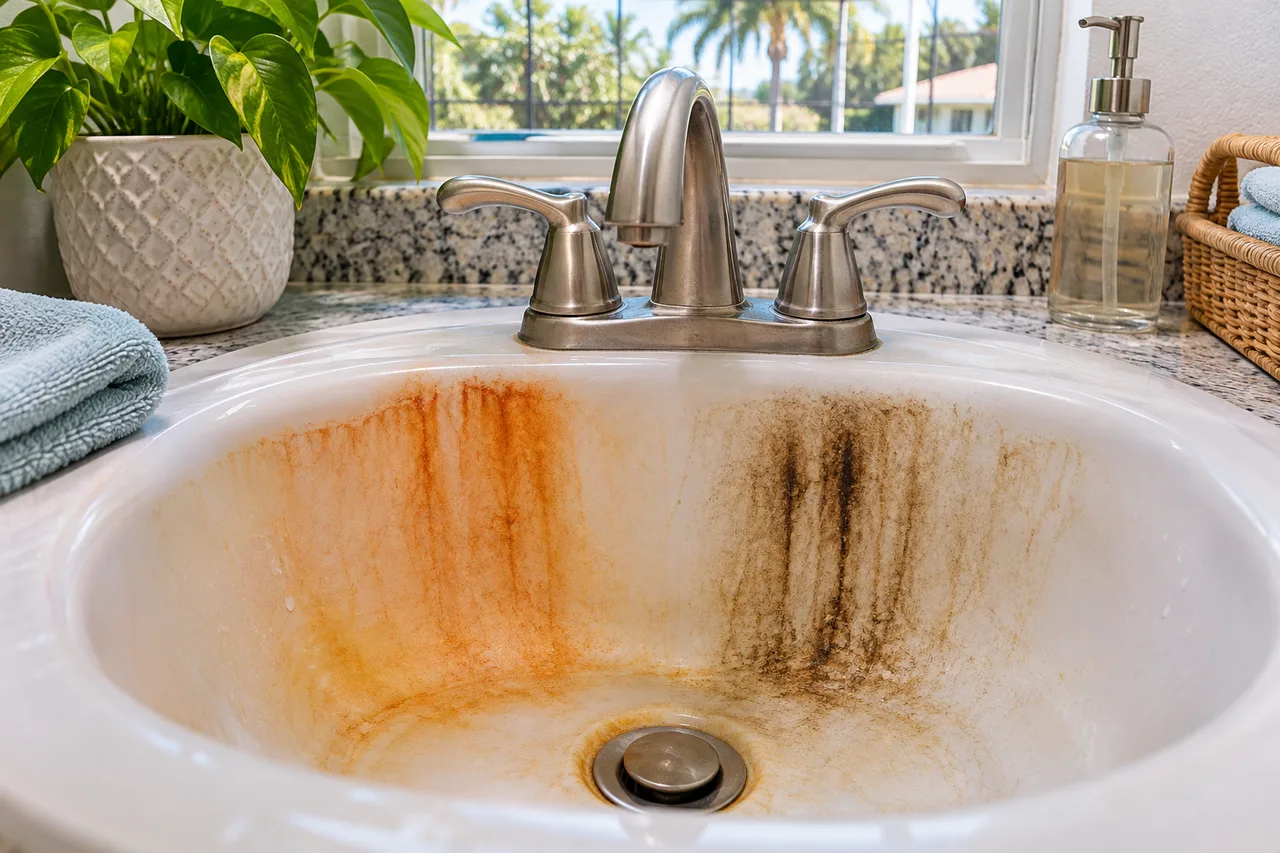
- Iron is linked to rusty color, sediment, metallic taste and reddish or orange staining.
- Manganese is linked to black to brown color, black staining and a bitter metallic taste.
- Both are aesthetic guidelines, not enforced health limits.
Stains tell a story. In many homes, the color of the mark on a sink, toilet or load of laundry points toward what is in the water.
Orange or red: iron
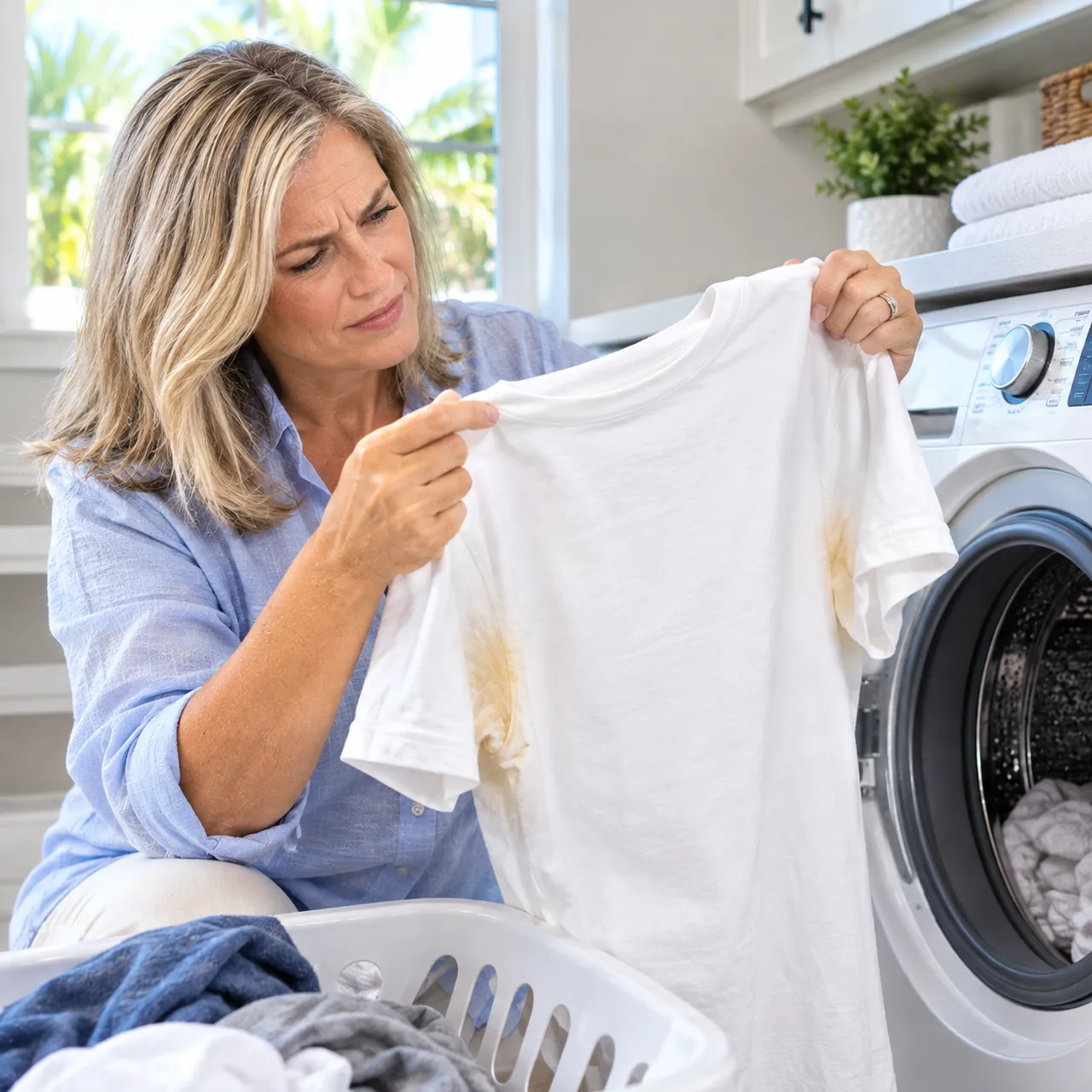
The EPA lists the secondary standard for iron at 0.3 mg/L. Above that level, it says iron can bring a rusty color, sediment, a metallic taste and reddish or orange staining. Our post on orange rust stains on laundry shows what that looks like.
Black or brown: manganese
For manganese the EPA secondary standard is 0.05 mg/L, much lower than iron. The EPA says it can cause black to brown water color, black staining and a bitter metallic taste.
Why a test helps
Iron and manganese can show up together, and the right treatment depends on how much of each is in your water. Reading the stain color is a good first clue; a test gives the numbers. If you are on a private well, also see our guide to how often to test well water.
Next step
Book a free in-home water test, or call or text us at (727) 334-0333.
Frequently asked questions
What color stains does iron cause?
The EPA says iron is linked to reddish or orange staining, along with rusty color, sediment and metallic taste.
What color stains does manganese cause?
The EPA says manganese is linked to black to brown water color and black staining.
Are these levels a health limit?
No. They are secondary standards, which the EPA does not enforce. They are about appearance, taste and staining.
Sources
- Secondary Drinking Water Standards: Guidance for Nuisance Chemicals, U.S. Environmental Protection Agency
We check local facts against official sources such as utility water quality reports and government notices. Spot something out of date? Text us at (727) 334-0333 and we'll fix it.