Water Tips
Water Softener Salt: Pellets vs Crystals vs Potassium
Standing in the salt aisle? Here's how evaporated pellets, crystals, rock salt and potassium chloride differ, which we recommend and why, and how to keep your brine tank healthy.
Key takeaways
- We recommend evaporated salt pellets because they're over 99% pure, which means less leftover residue in the brine tank.
- Rock salt is cheaper but carries more insoluble material that can build up as sludge.
- Potassium chloride works in place of sodium chloride but costs more and is less efficient; follow your softener maker's guidance.
- Keep the salt level comfortably above the water line and don't overfill. Never change your softener's valve settings yourself.
Softener salt looks like a simple purchase until you see the shelf: pellets, crystals, "rust remover" blends, rock salt, potassium. Here's what the differences mean for your softener.
Why the salt matters at all
Your softener's resin removes hardness from water. Every so often it regenerates, rinsing the resin with salty brine from the brine tank to recharge it. The salt you add dissolves to make that brine. Whatever doesn't dissolve stays behind in the tank.
The main types
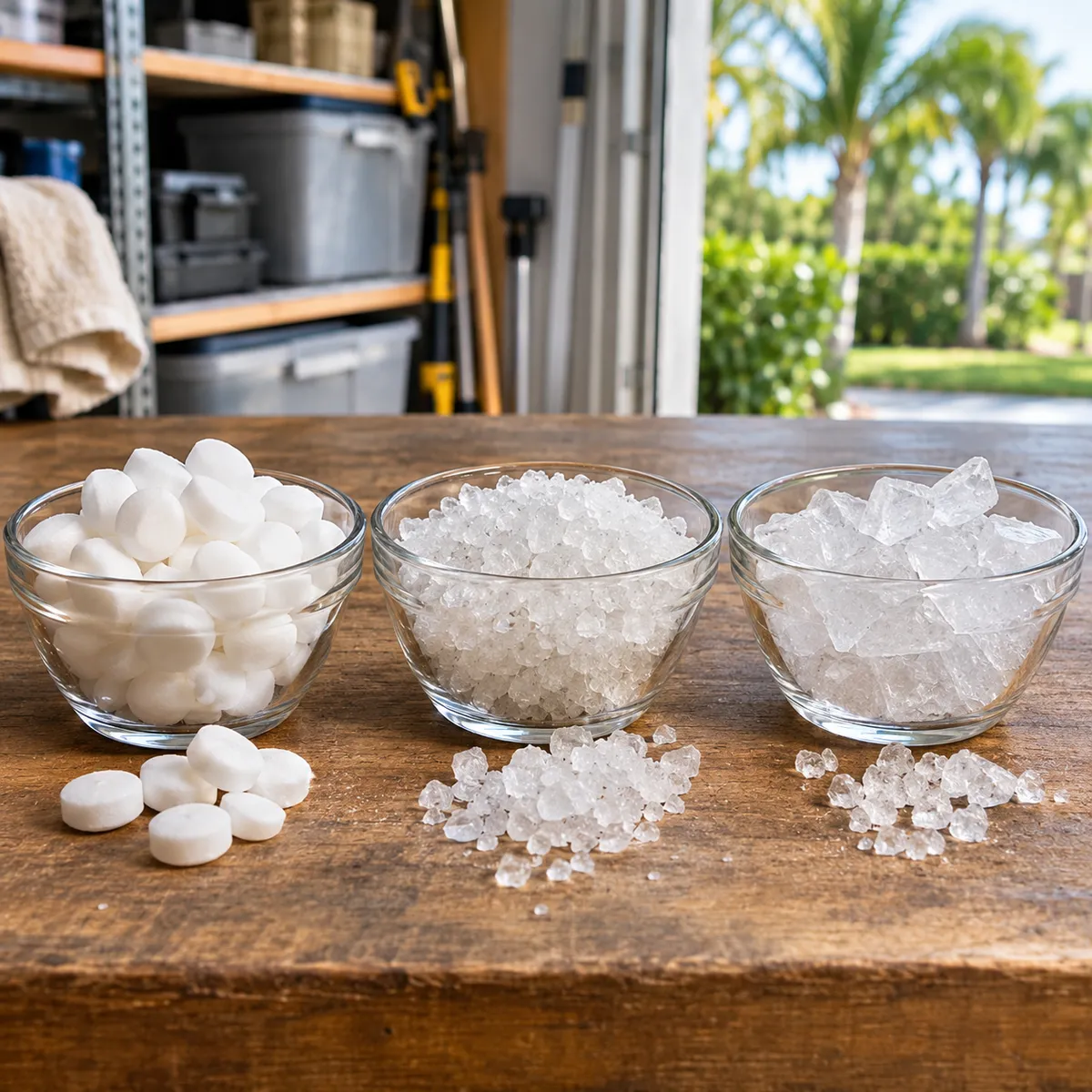
| Type | What it is | Things to know |
|---|---|---|
| Evaporated salt pellets | Salt purified by evaporation and pressed into pellets | Over 99% pure, so little residue. Our recommendation. |
| Salt crystals | Coarser crystals, often from evaporated seawater | Commonly used; purity varies by product. |
| Rock salt | Mined salt, minimally processed | Lowest cost, but more insoluble material that can turn into sludge. |
| Potassium chloride | A sodium-free alternative | Works in most softeners but costs more and is less efficient, so settings may differ. |
Why we recommend evaporated pellets
We recommend evaporated salt pellets because they're over 99% pure. Higher purity means less insoluble material left in the bottom of the brine tank, so the tank stays cleaner and brine forms reliably.
What about potassium?
Potassium chloride is an option for people who want to avoid adding sodium. The Minnesota Department of Health notes softeners can be filled with sodium or potassium chloride following the manufacturer's recommendations. Potassium usually costs more and regenerates less efficiently, so if you switch, have the settings checked by a professional. Wondering how much sodium softened water adds? See is softened water safe to drink.
Keeping the brine tank healthy
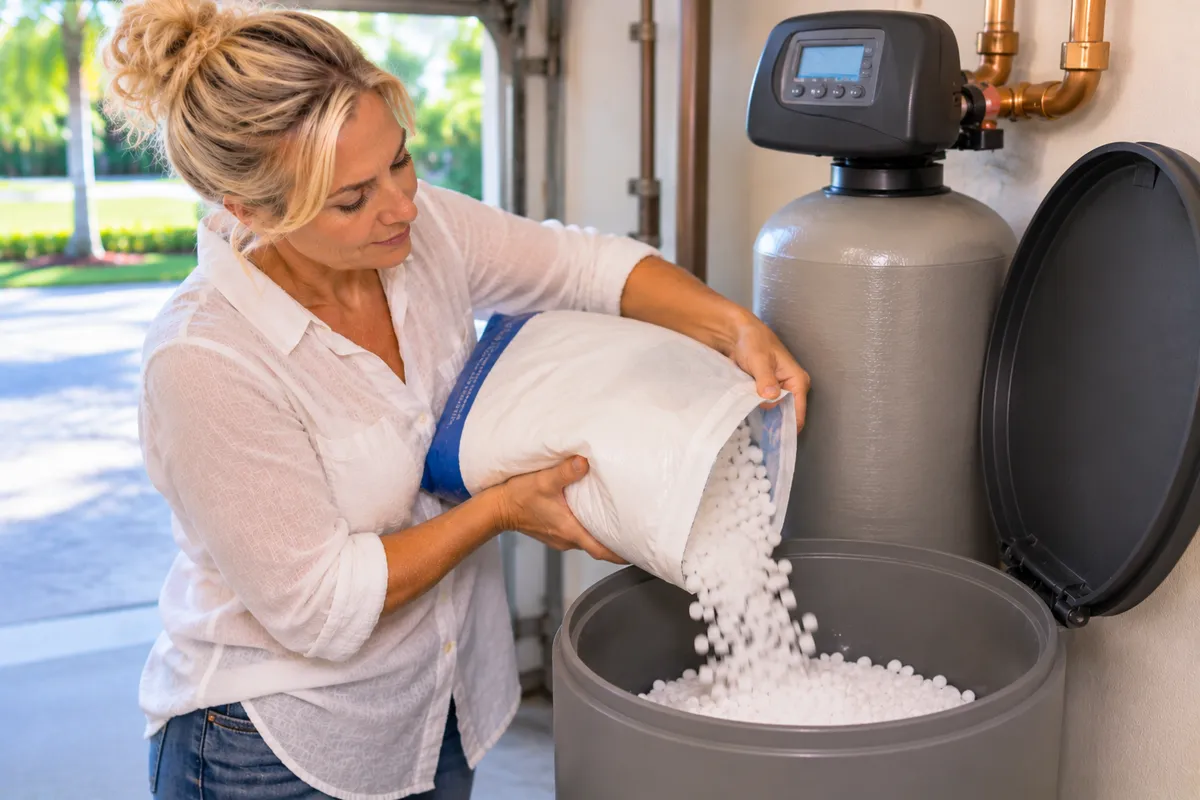
- Check monthly. Lift the lid and look. You want salt visible above the water.
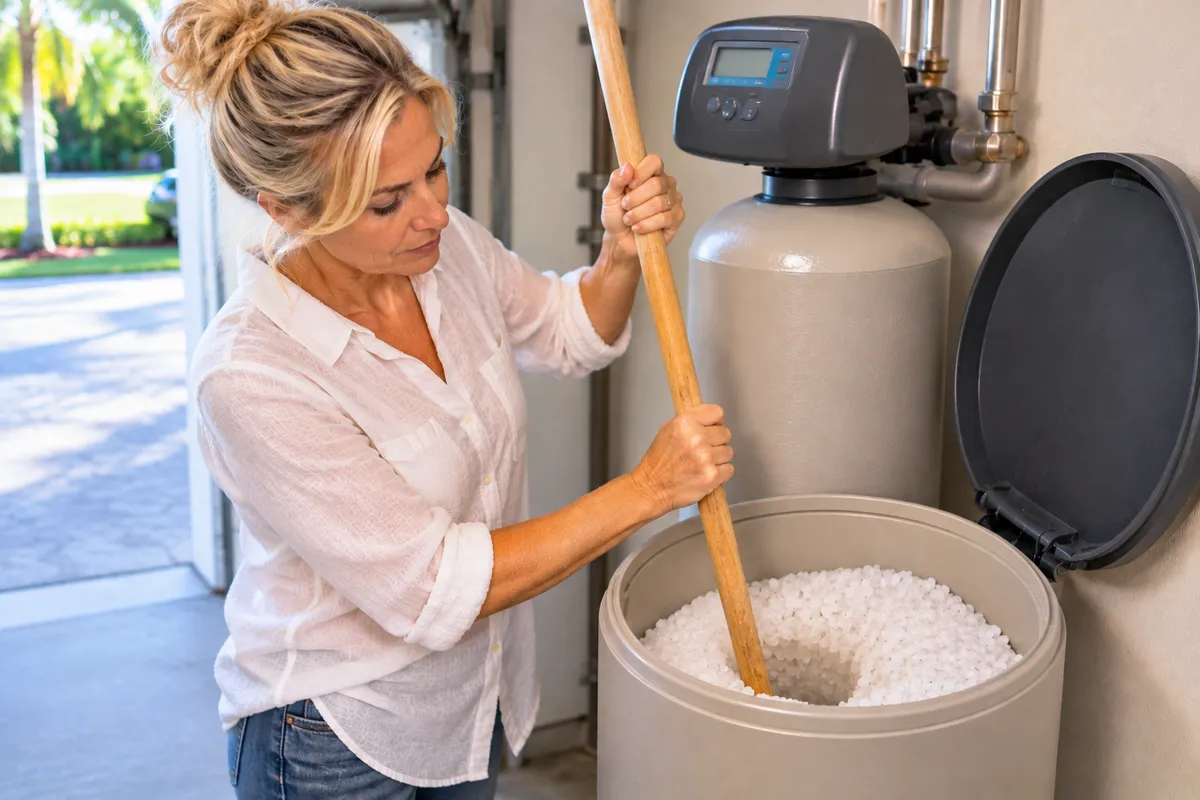
- Don't overfill. Packing the tank to the brim can lead to a hard crust called a salt bridge. See how to spot a salt bridge.
- Stick with one type instead of mixing different salts.
- Leave the control valve alone. Settings are matched to your water's hardness and household. If something seems off, call your installer instead of changing it yourself.
Want salt handled for you?
FHWS customers can choose salt top-offs every 3, 6, 9 or 12 months. We'll top your salt off: make sure there's a bag in there, add an extra bag to the brine tank, or if it's full we'll leave you one. Have questions about your softener? Call or text (727) 334-0333 anytime, or start with a free in-home water test.
Frequently asked questions
What is the best salt for a water softener?
We recommend evaporated salt pellets because they're over 99% pure, which leaves less residue in the brine tank. Always follow your softener maker's guidance.
Can I use potassium instead of salt?
Most softeners can use potassium chloride. It costs more and is less efficient, so have the settings checked by a professional if you switch.
How full should my brine tank be?
Keep salt visible above the water line, but don't pack the tank to the top. Overfilling can cause a hard salt bridge.
Sources
- Home Water Softening, Minnesota Department of Health
- Water Softening (Agdex 716-D32), Alberta Agriculture
We check local facts against official sources such as utility water quality reports and government notices. Spot something out of date? Text us at (727) 334-0333 and we'll fix it.