Water Tips
Is Softened Water Safe to Drink? How Much Sodium It Really Adds
A softener swaps hardness for a small amount of sodium. Here's how to estimate how much it adds to your water, what health agencies say, and options if you watch your sodium.

Key takeaways
- Salt-based softeners add about 8 mg of sodium per liter for every grain per gallon of hardness removed.
- At about 10.9 grains per gallon, that's roughly 87 mg of sodium per liter of softened water.
- Health agencies say softened water poses no known hazard for most people; people on sodium-restricted diets should ask their doctor.
- Options include a separate unsoftened drinking tap, potassium chloride, or reverse osmosis at the kitchen sink.
It's one of the first questions people ask about softeners: if the softener uses salt, am I drinking salt water? No. Softened water doesn't taste salty, and the amount of sodium added is modest. Here's how to figure out the real number for your home.
Why softened water has some sodium
A softener removes calcium and magnesium by ion exchange: the resin grabs hardness minerals and releases sodium in their place. The salt itself doesn't flow into your water. It's used to make brine that recharges the resin. (More on that in softener vs salt-free conditioner.)
How much sodium? The simple math
North Dakota State University Extension says that for every grain of hardness removed, about 8 mg/L of sodium is added. Alberta Agriculture gives a similar rule of thumb.
| Hardness removed | Sodium added (approx.) | In an 8 oz glass |
|---|---|---|
| 5 gpg | 40 mg/L | About 9 mg |
| 10.9 gpg (City of Tampa average) | 87 mg/L | About 21 mg |
| 15 gpg | 120 mg/L | About 28 mg |
An 8 ounce glass is about 0.24 liters.
What health agencies say
The Minnesota Department of Health says that for most people, drinking softened water poses no known health hazard, and the extra sodium is typically insignificant compared with total daily intake. It also lists sodium as something to weigh. Alberta Agriculture advises people on sodium-restricted diets to talk with their physician if their water has more than 20 mg/L of sodium.
If you're on a low-sodium diet for a medical reason, ask your doctor. That's their call, not ours.
Options if you watch your sodium
- Leave a drinking tap unsoftened. Some homes keep the kitchen cold line on hard water.
- Use potassium chloride instead of sodium chloride salt. It costs more and regenerates less efficiently, so settings may need a professional's check.
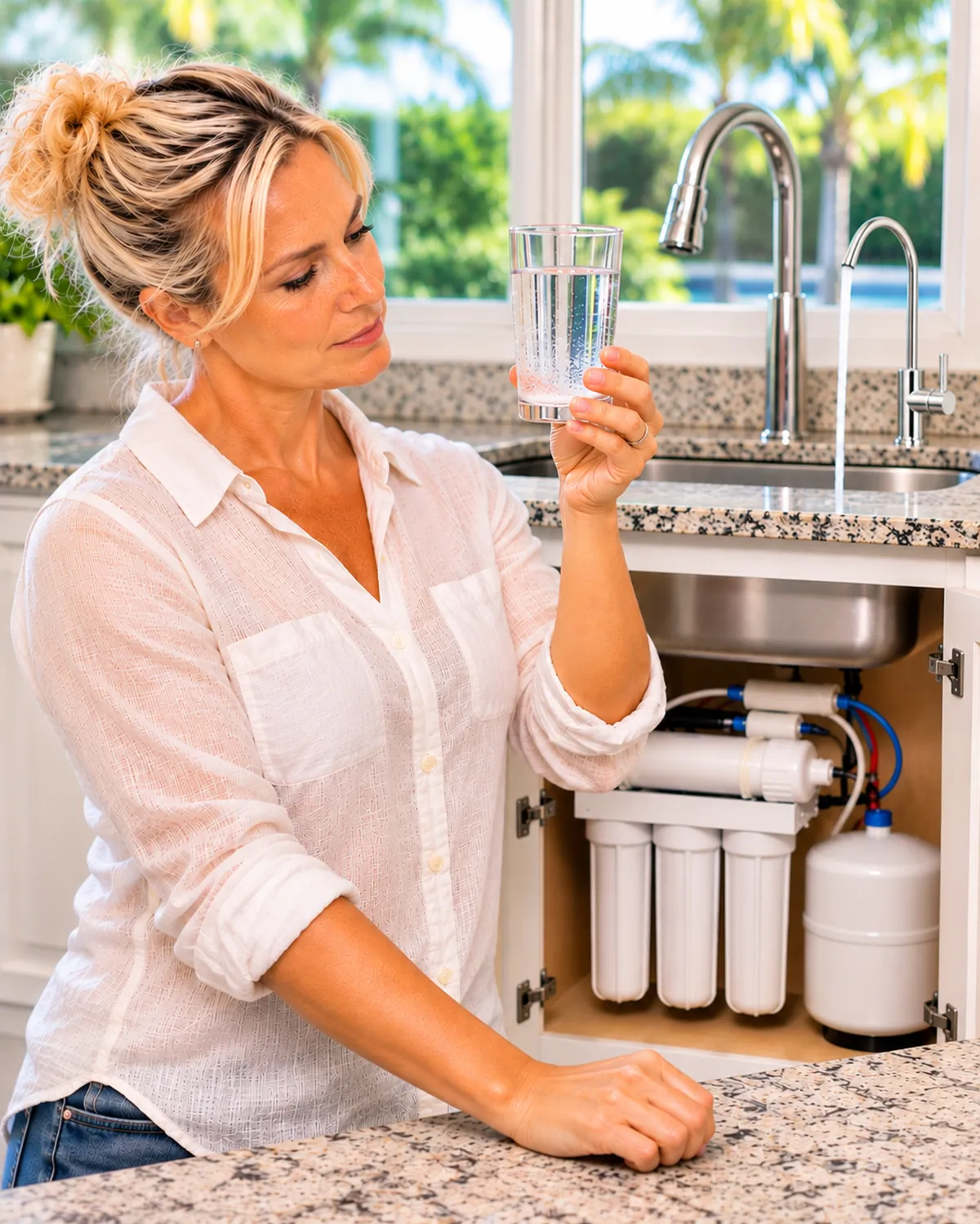
- Add reverse osmosis at the kitchen sink. RO is designed to reduce sodium and other dissolved minerals in drinking water. See do you need RO if you have a softener.
Know your starting number
The sodium a softener adds depends on how hard your water is to begin with. Our free in-home water test measures hardness at your tap, so you can do the math with real numbers. Call or text (727) 334-0333 anytime.
Frequently asked questions
Is it safe to drink softened water?
For most people, yes. The Minnesota Department of Health says drinking softened water poses no known health hazard for most people. Those on sodium-restricted diets should ask their doctor.
How much sodium does a water softener add?
About 8 mg per liter for every grain per gallon of hardness removed. At 10.9 grains per gallon, that's roughly 87 mg per liter, or about 21 mg in an 8 ounce glass.
Does softened water taste salty?
No. The sodium added is too little to taste salty for most people.
Sources
- Water Softening (Ion Exchange), WQ1031, North Dakota State University Extension
- Home Water Softening, Minnesota Department of Health
- Water Softening (Agdex 716-D32), Alberta Agriculture
We check local facts against official sources such as utility water quality reports and government notices. Spot something out of date? Text us at (727) 334-0333 and we'll fix it.