Water Quality
What Does the pH of Tap Water Mean? The 6.5 to 8.5 Range Explained
The EPA lists 6.5 to 8.5 as the secondary range for pH in drinking water. Here is what low and high pH can do to taste, pipes and fixtures.
Key takeaways
- The EPA's secondary range for pH is 6.5 to 8.5.
- The EPA says low pH can taste bitter and metallic and can corrode pipes and fixtures.
- High pH can feel slippery, taste like soda and leave deposits, according to the EPA.
- pH is one number on a full test, not a verdict by itself.
pH is a scale that tells you how acidic or basic water is. Most homeowners never think about it until something seems off: a bitter taste, blue-green stains, or water that feels odd on the skin.
The range the EPA lists
The EPA's secondary standard for pH is 6.5 to 8.5. Secondary standards are not enforced and are about how water tastes, looks and feels, not health.
What low pH can do
According to the EPA, low pH water can taste bitter and metallic, and it can corrode pipes and fixtures. That corrosion is also why low pH can lead to staining. Our article on blue-green stains covers one common result.
What high pH can do
The EPA says high pH can give water a slippery feel, a soda-like taste and can leave deposits. See our post on slippery-feeling water for more.
How to find your number
pH is a standard part of our free in-home water test. Call or text us at (727) 334-0333 and we will read it at your tap along with hardness and other basics.
Frequently asked questions
What pH range does the EPA list for drinking water?
6.5 to 8.5. It is a secondary standard, so it is a guideline about taste, corrosion and deposits, not an enforced health limit.
Can low pH damage plumbing?
The EPA says low pH water can corrode pipes and fixtures and may taste bitter or metallic.
Can I test pH myself?
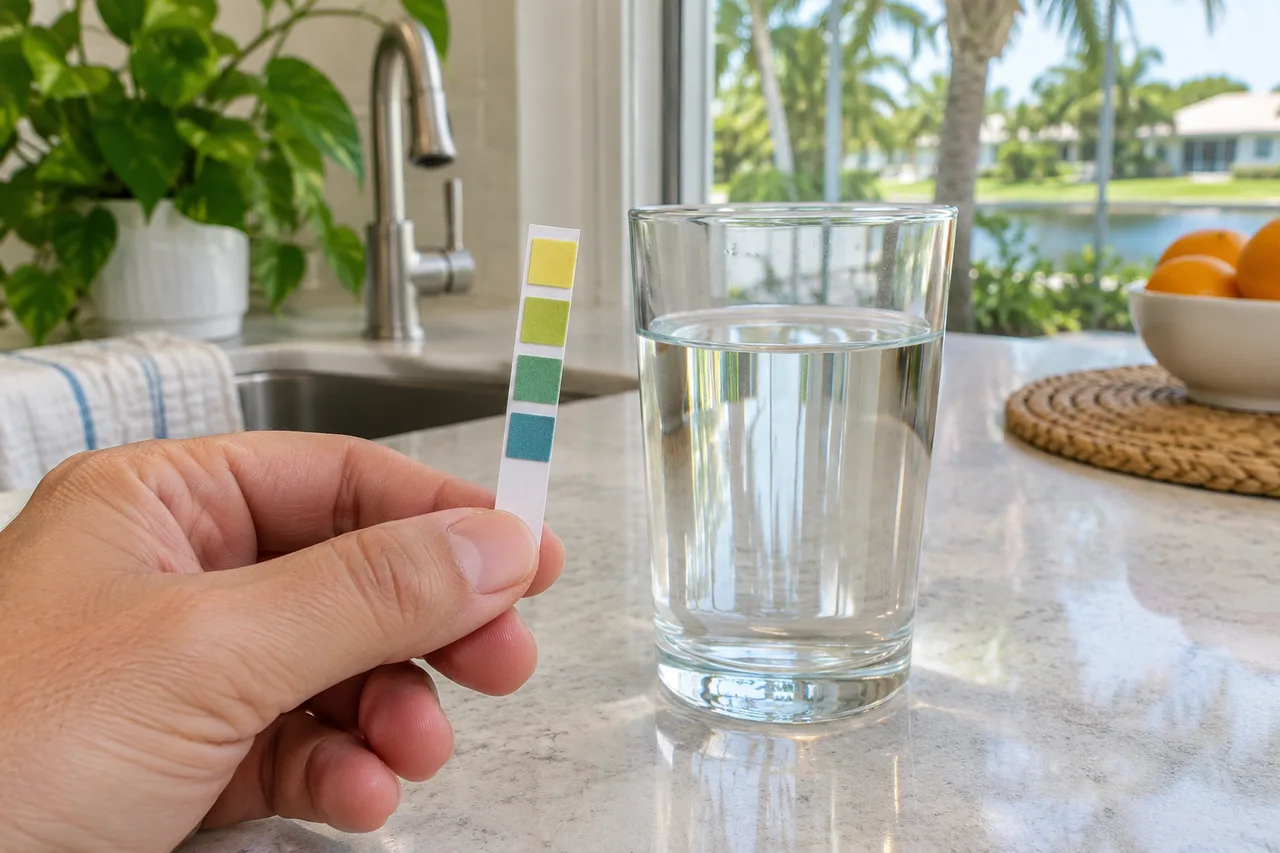
Test strips give a rough number. A water test gives a more precise reading along with other results.
Sources
- Secondary Drinking Water Standards: Guidance for Nuisance Chemicals, U.S. Environmental Protection Agency
We check local facts against official sources such as utility water quality reports and government notices. Spot something out of date? Text us at (727) 334-0333 and we'll fix it.