Water Tips
Hard Water in Tampa Bay: 7 Signs and What It Does to Your Home
Spotty glasses, crusty faucets and a scaled-up kettle are classic signs of hard water. Here's how hard Tampa water is, how hardness is measured, and what it means for your fixtures and appliances.
Key takeaways
- Hard water is water with a lot of dissolved calcium and magnesium, common where water comes from Florida's limestone aquifer.
- The City of Tampa's 2022 report listed average hardness of 186 mg/L, about 10.9 grains per gallon. The USGS calls anything over 180 mg/L very hard.
- Signs include spots on dishes, white crust on faucets and showerheads, soap that won't lather well, and scale in kettles.
- Hardness isn't a health issue. It's a home and appliance issue, and it's easy to measure.
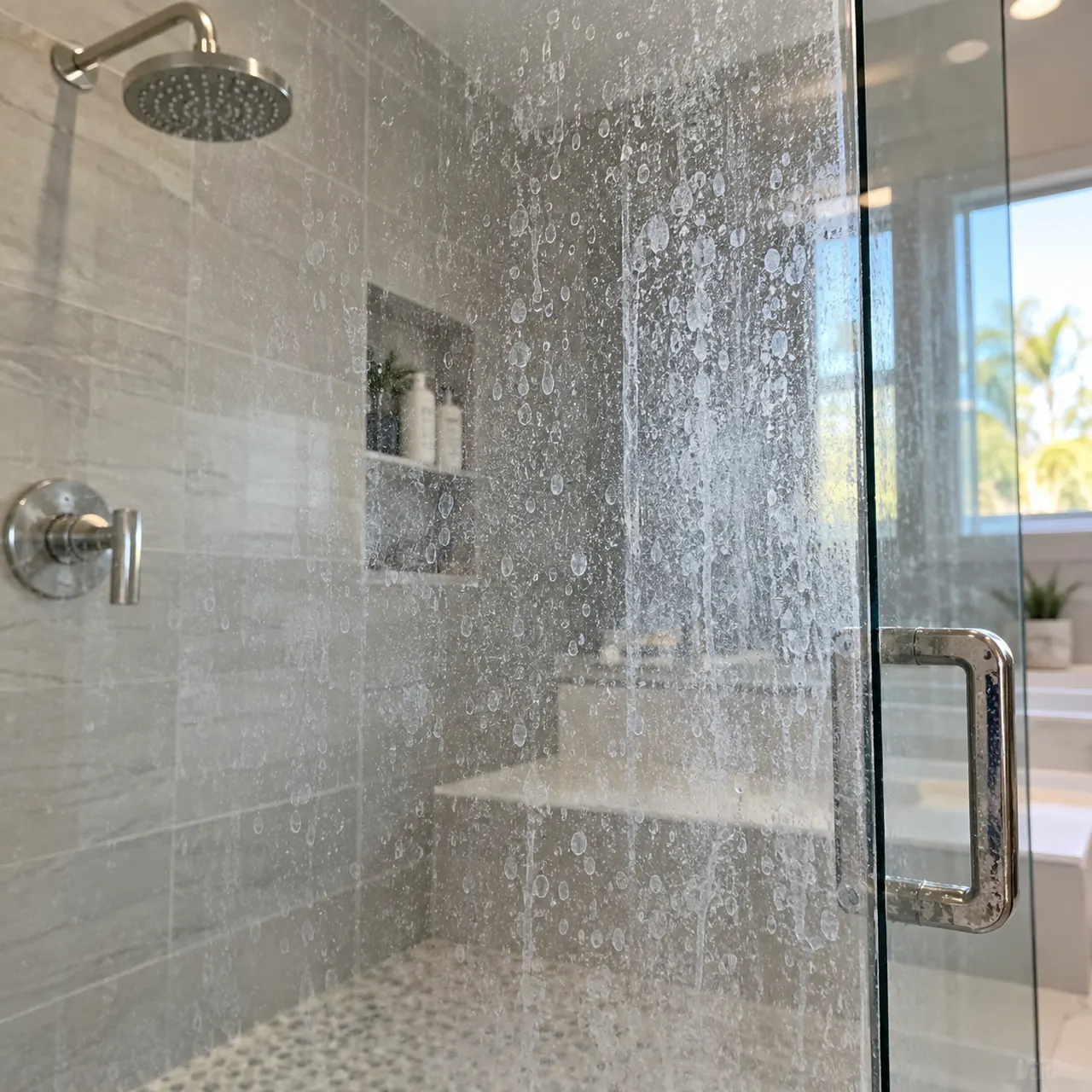
If you've moved to Tampa Bay from somewhere else, you may have noticed it right away: water spots on every glass, a chalky ring around the faucet, a shower door that never looks clean. That's hard water, and it's one of the most common water issues in this part of Florida.
What makes water "hard"
Hard water carries dissolved minerals, mainly calcium and magnesium. Much of Tampa Bay's water starts in the Floridan aquifer, which sits in limestone. As groundwater moves through that rock it picks up those minerals. (See where Tampa Bay's water comes from for the full picture.)
Hardness is reported two ways: milligrams per liter (mg/L), which is the same as parts per million, or grains per gallon (gpg), which the water treatment industry uses. One grain per gallon equals about 17.1 mg/L.
The U.S. Geological Survey uses this scale:
| Hardness (mg/L) | Grains per gallon | USGS classification |
|---|---|---|
| 0 to 60 | 0 to 3.5 | Soft |
| 61 to 120 | 3.6 to 7.0 | Moderately hard |
| 121 to 180 | 7.1 to 10.5 | Hard |
| Over 180 | Over 10.5 | Very hard |
How hard is Tampa's water?
The City of Tampa's 2022 water quality report listed an average total hardness of 186 mg/L, or about 10.9 grains per gallon, in its finished water. That lands just inside the USGS "very hard" range. Other utilities around the bay report their own figures, and hardness can vary by neighborhood and over the year as the source blend shifts. Check your own utility's report, or have it measured at your tap.
7 signs you have hard water
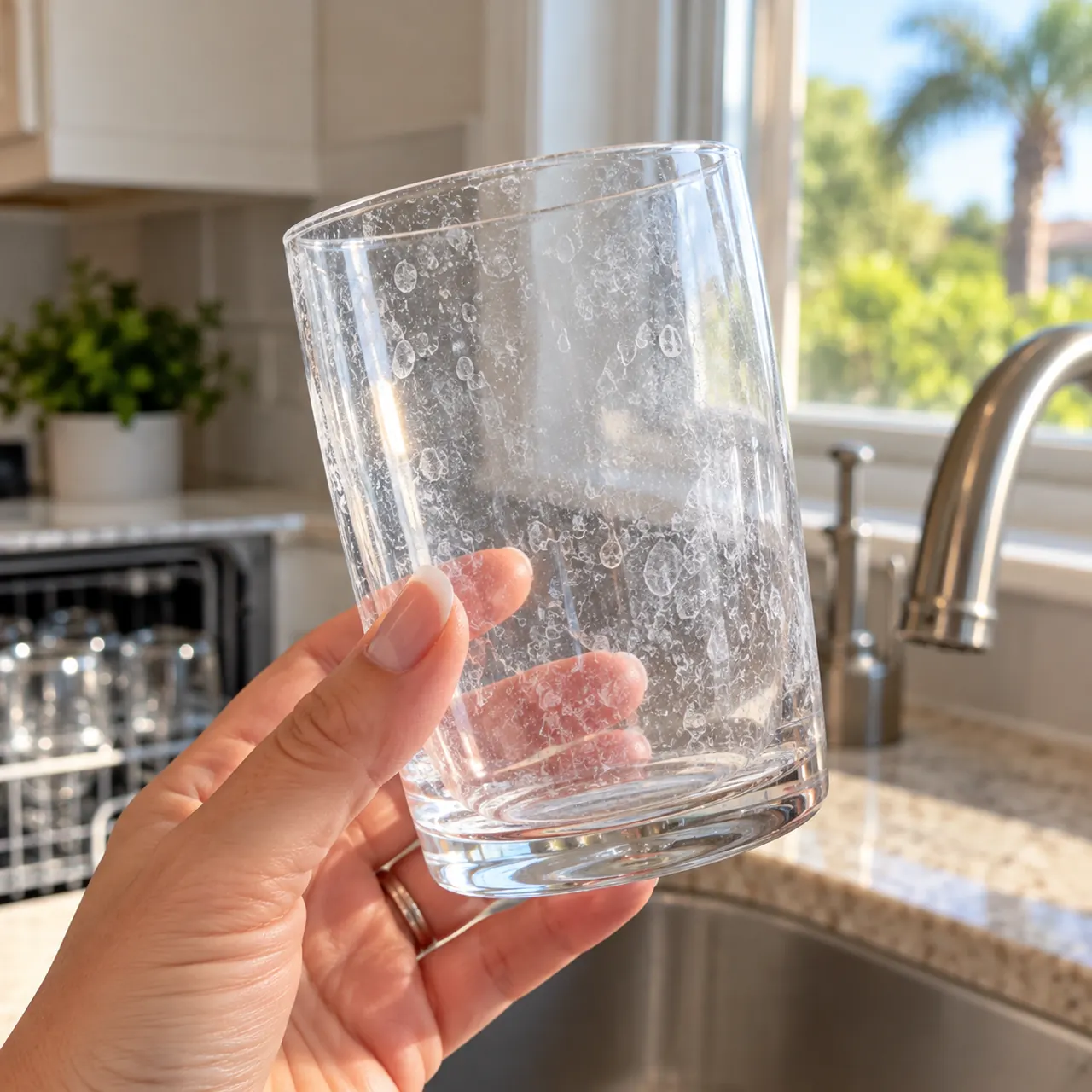
- Spots and film on glasses and dishes, even right out of the dishwasher.
- White, chalky crust on faucets, showerheads and around drains.
- Soap and shampoo that don't lather well, so you use more.
- Soap scum on shower doors, tubs and tile that's hard to scrub off.
- Scale inside kettles and coffee makers, the flaky white layer at the bottom.
- Showerheads that lose pressure as mineral buildup clogs the nozzles.
- Laundry that feels stiff or looks dull over time.
What hard water does to your home
Hard water isn't a health problem. Calcium and magnesium aren't harmful to drink. The cost shows up in your home:
- Water heaters. When hard water is heated, minerals come out of solution and settle as sediment and scale. University of Florida IFAS Extension advises draining about a quart of water from a tank-style water heater every three to six months to remove sediment that settles at the bottom. Hard water makes that buildup happen faster.
- Fixtures and appliances. Scale clogs aerators, showerheads, dishwasher spray arms and ice makers, and it's what leaves the crust you keep scrubbing.
- Cleaning time and products. Hard water reacts with soap, so it takes more detergent to get the same result, and you spend more time fighting spots and scum.
What you can do
For a quick fix on fixtures, white vinegar dissolves light mineral buildup on showerheads and faucet aerators. A rinse aid helps with dishwasher spots.
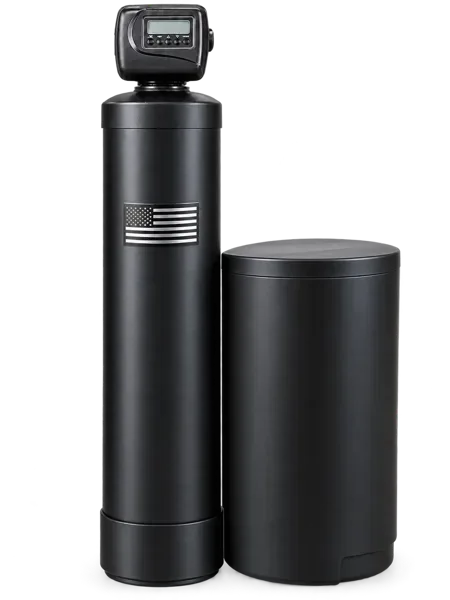
For a whole-home fix, a water softener removes hardness minerals before they reach your pipes, fixtures and water heater. Softeners use ion exchange resin; our premium systems use 10% cross-linked resin, a tougher grade that holds up better to the chlorine and chloramine in city water. If you also want chlorine or chloramine reduced, a softener and carbon combo handles both.
The first step is knowing your number. Our free in-home water test measures hardness right at your tap so you know exactly what you're working with. No pressure, just your results explained. Call or text anytime at (727) 334-0333.
Frequently asked questions
How hard is Tampa tap water?
The City of Tampa's 2022 water quality report listed an average total hardness of 186 mg/L, about 10.9 grains per gallon. On the U.S. Geological Survey scale, anything over 180 mg/L is classified as very hard.
Is hard water bad for you?
Hard water isn't considered a health risk. Calcium and magnesium are minerals people get from food too. The issues are scale, spots, soap use and wear on water-using appliances.
How do I convert mg/L hardness to grains per gallon?
Divide mg/L by 17.1. For example, 186 mg/L divided by 17.1 is about 10.9 grains per gallon.
Why is Florida water so hard?
Much of Florida's water comes from the Floridan aquifer, which is limestone. Groundwater dissolves calcium and magnesium from the rock as it moves through it.
Sources
- 2022 Water Quality Report, City of Tampa Water Department
- Hardness of Water, U.S. Geological Survey
- Water heater maintenance guidance (EDIS publication), University of Florida IFAS Extension (EDIS)
We check local facts against official sources such as utility water quality reports and government notices. Spot something out of date? Text us at (727) 334-0333 and we'll fix it.