Buying Guides
Does a Fridge Filter or Pitcher Remove Hard Water?
Refrigerator and pitcher filters mainly target chlorine taste and odor, not hardness. Here's what NSF/ANSI 42 and 53 mean, what these filters do well, and what they don't.

Key takeaways
- Most fridge and pitcher filters use carbon to improve taste and odor. They aren't designed to soften water.
- NSF/ANSI 42 covers aesthetic effects like chlorine taste and odor; NSF/ANSI 53 covers specific health-related contaminants claimed on the listing.
- Certification is claim-specific, so check the exact model and claims in NSF's listings.
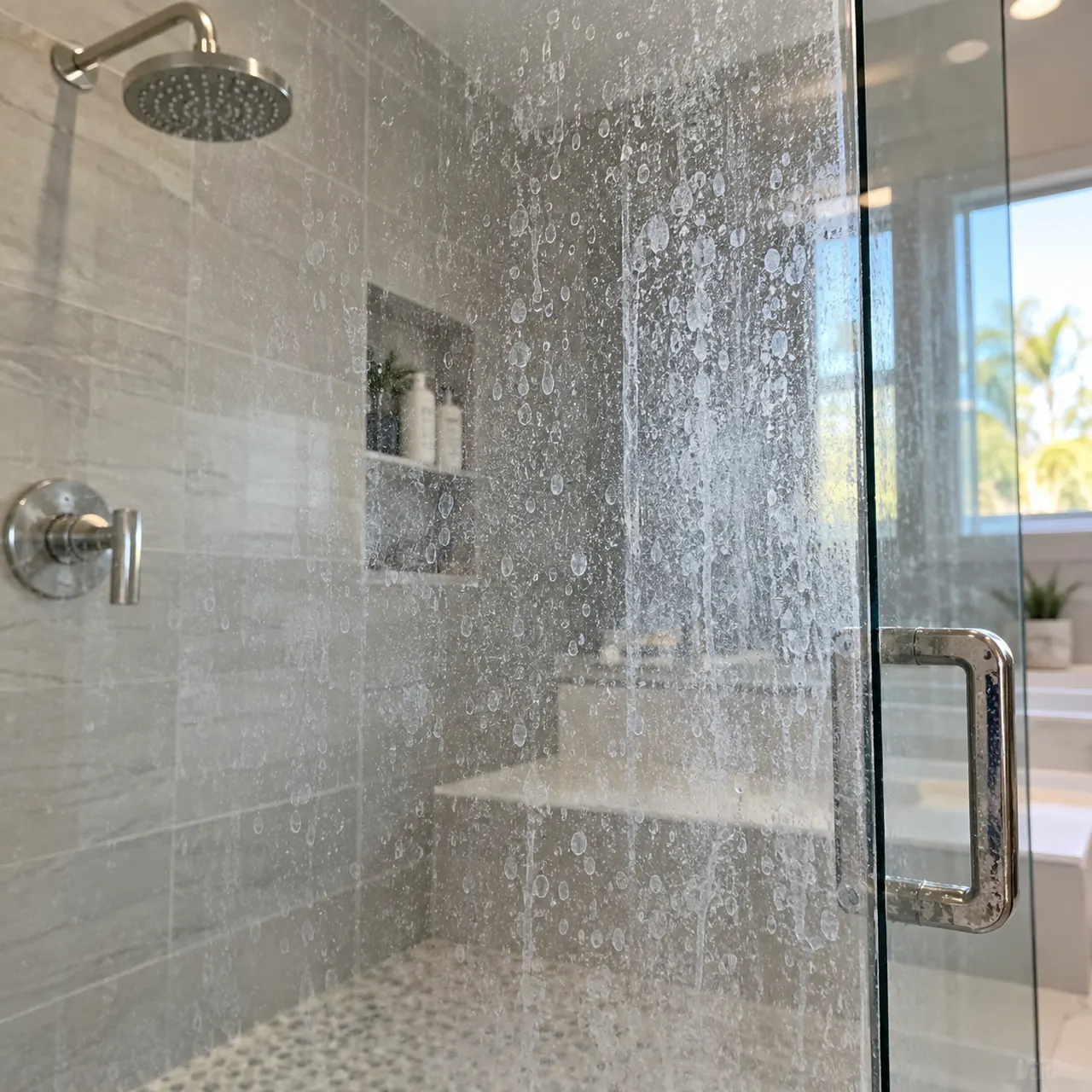
- Scale in ice makers and spots on glasses are hardness problems that a taste filter won't stop.
If your fridge has a filter, you might assume your water is "taken care of." For taste, maybe. For hardness, no. Here's what those filters are built to do.
What fridge and pitcher filters do
Most refrigerator and pitcher filters are small carbon cartridges. Carbon is good at reducing chlorine taste and odor and can be certified for certain other contaminants. Calcium and magnesium, the minerals that make water hard, mostly pass right through.
What the NSF numbers mean
- NSF/ANSI 42 covers aesthetic effects such as chlorine taste and odor and particulates.
- NSF/ANSI 53 covers health-related contaminants, such as lead, but only the specific ones listed for that filter.
Certification is claim by claim. A filter certified for chlorine taste isn't automatically certified for anything else. You can look up the exact cartridge model in NSF's online listings to see what it's certified to reduce.
What they don't do
- Hardness. Spots on glasses, scale in the kettle, and crust on the ice maker come from calcium and magnesium, which these filters aren't built to remove.
- The rest of the house. A fridge filter treats one tap. Showers, laundry, the dishwasher and the water heater still get untreated water.
- Chloramine, reliably. Chloramine is harder to reduce than chlorine, so check whether a filter is specifically certified for it.
For a side-by-side of filter types, see pitcher vs under-sink vs whole-home filters.
Change it on schedule
A filter only works within its rated capacity. Replace cartridges on the schedule in your fridge or pitcher manual, usually measured in months or gallons.
If hardness is your issue
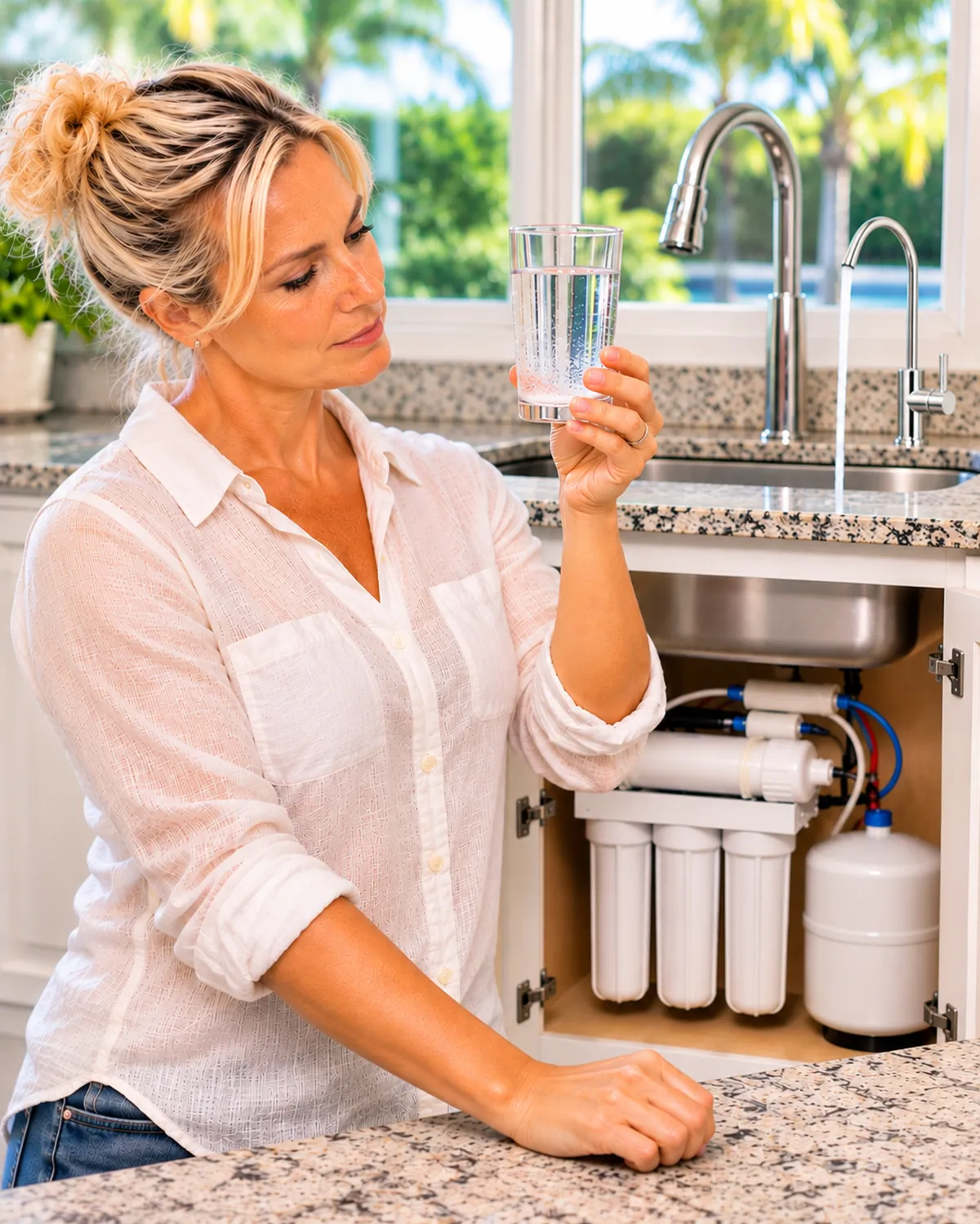
Hardness is handled by a water softener, which treats the whole home. For drinking water beyond what a fridge filter does, many people add reverse osmosis at the kitchen sink; see do you need RO if you have a softener.
Want to know what's in your water first? Our free in-home water test checks hardness and chlorine or chloramine at your tap. Call or text (727) 334-0333 anytime.
Frequently asked questions
Does a refrigerator filter soften water?
No. Most fridge filters are carbon cartridges aimed at taste and odor. Calcium and magnesium mostly pass through.
What does NSF 42 mean on a water filter?
NSF/ANSI 42 covers aesthetic effects such as chlorine taste and odor. Check NSF's listings for the specific claims on your model.
Why does my ice maker have white scale?
That's hardness. Calcium and magnesium in the water leave scale as water freezes and evaporates. A taste filter won't prevent it.
Sources
- NSF Certified Drinking Water Treatment Units listings, NSF
- Hardness of Water, U.S. Geological Survey
We check local facts against official sources such as utility water quality reports and government notices. Spot something out of date? Text us at (727) 334-0333 and we'll fix it.